The short answer
Yes. In Texas, the total amount charged to remodel, repair or restore nonresidential real property, labor and materials together, is subject to sales tax: 6.25% state tax plus up to 2% local, for a maximum of 8.25%. New construction, including the first finish-out of a new space, is not taxed on labor.
Is commercial remodeling taxable in Texas?
Yes. The Texas Comptroller's publication Real Property Repair and Remodeling (94-116) says that "the total amount charged for remodeling, repairing, or restoring nonresidential real property is taxable." That means the labor, the materials and the costs the contractor passes on to you, all of it.
The rate is the regular sales tax rate. The Comptroller's sales and use tax page lists a 6.25 percent state rate, with local jurisdictions adding as much as 2 percent, for a maximum combined rate of 8.25 percent.
One item is left out of the total: separately stated building permit fees that the contractor pays on your behalf. Those are not taxed when they are listed on their own.
The rule is written in the Texas Administrative Code at 34 TAC §3.357, the Comptroller's rule on nonresidential real property repair and remodeling. For an owner, the practical meaning is simple: on a commercial remodel, budget for sales tax on the whole contract, not just the materials.
What counts as nonresidential property and remodeling
Nonresidential property is most commercial property. Publication 94-116 lists hospitals, office buildings, refineries, warehouses, parking garages, retail shops, restaurants and manufacturing facilities as examples. Hotels count as nonresidential too, even though people sleep there.
Residential property is on the other side of the line: houses, duplexes, apartment complexes, condominiums, nursing homes and retirement homes. Building, repairing or remodeling those is treated as nontaxable contractor labor. For buildings that mix residential and nonresidential uses, the Comptroller says to contact it for guidance.
Remodeling of nonresidential property covers rebuilding, upgrading or replacing parts of an existing structure, and repairing parts that are damaged, broken or defective. The publication's examples include reroofing and repainting. Repainting is not taxable when it is maintenance, and minor maintenance like replacing a machine belt is left out.
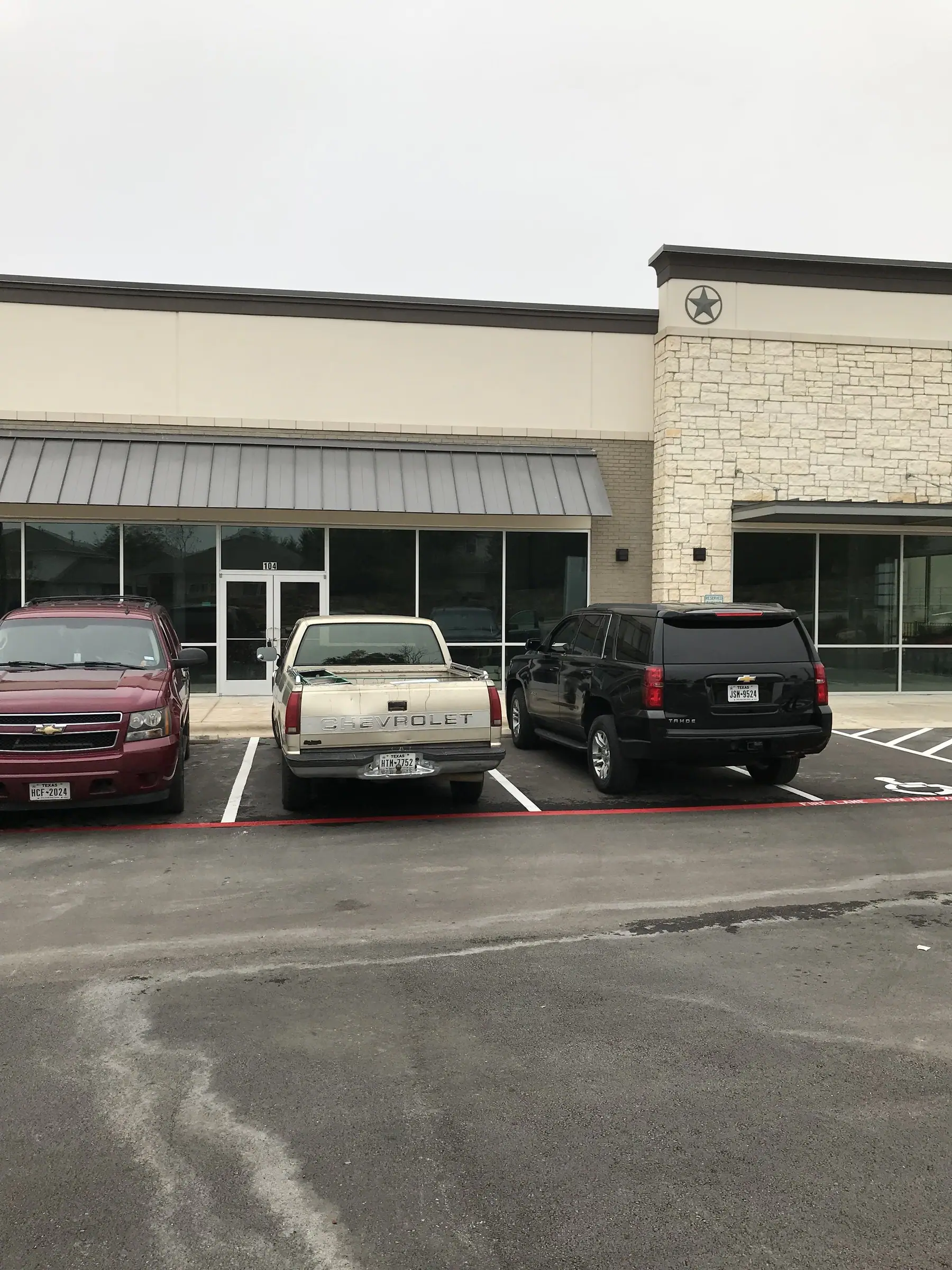
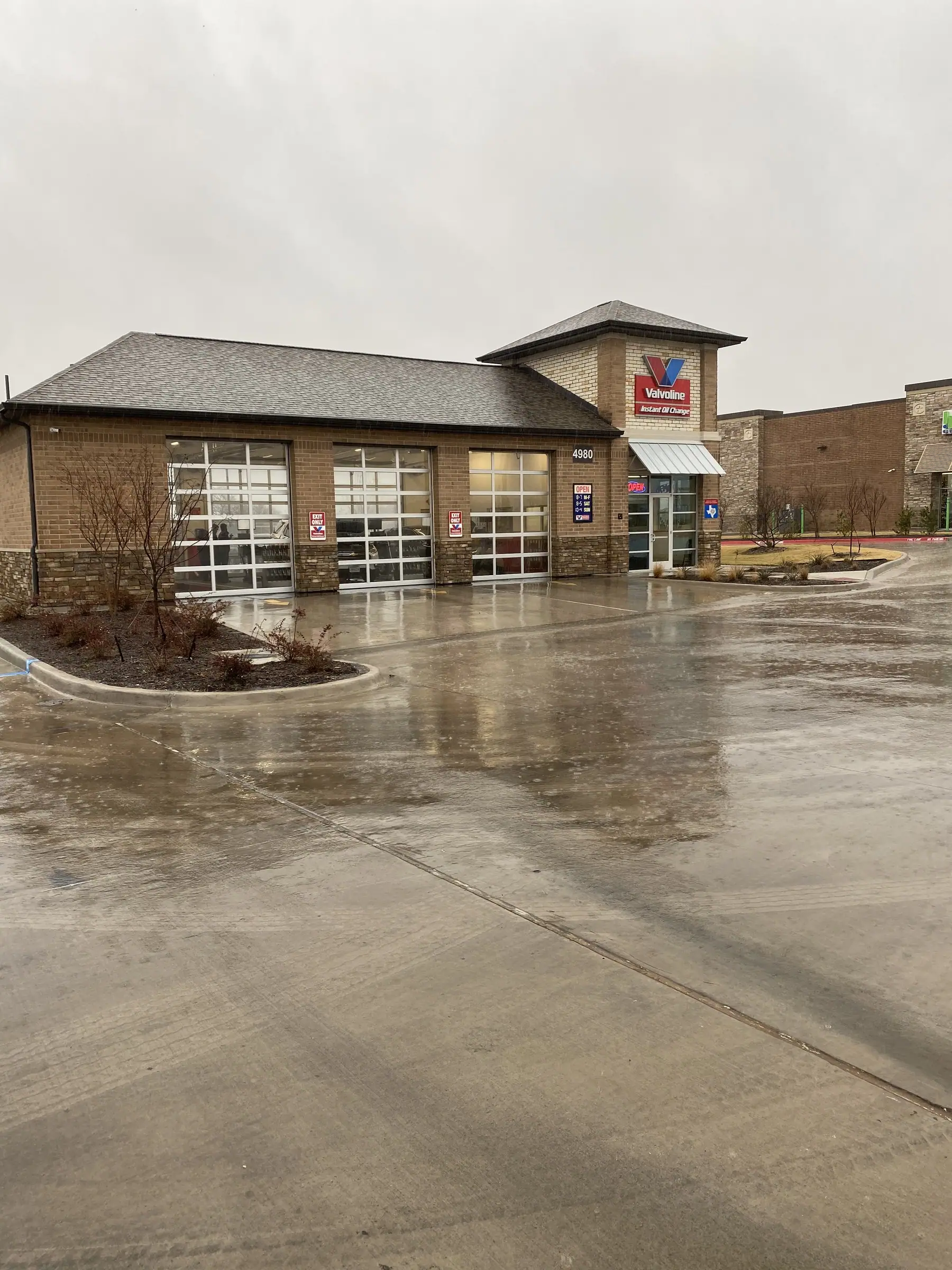
In practice, most work an existing restaurant, store, office or gas station asks for falls in the taxable group: a remodel that moves walls or updates the storefront, a new roof on an existing building through our roofing work, a restroom rebuild, or replacing a damaged section of a building.
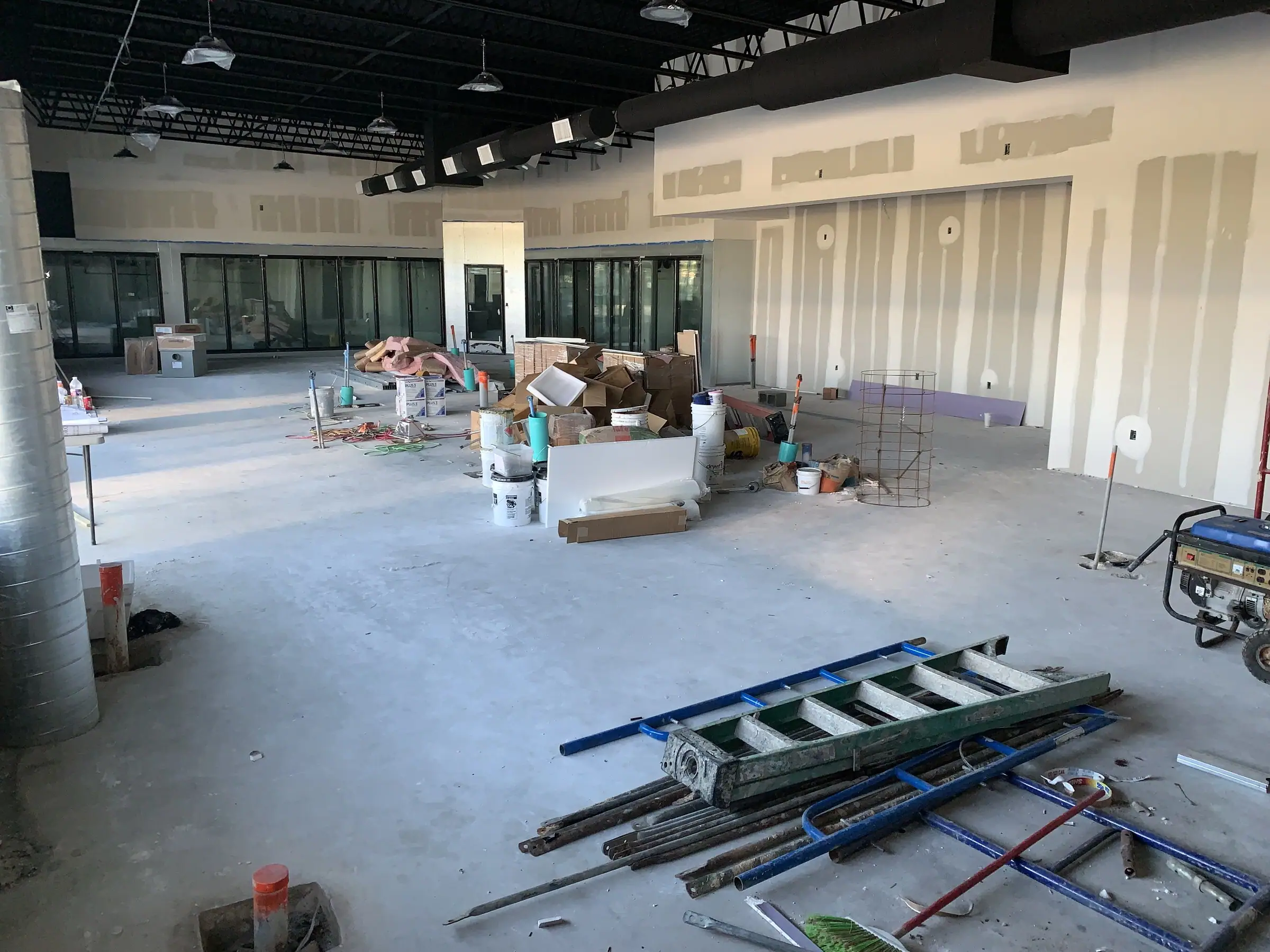
The first finish-out of a new shell space counts as new construction in Texas, while redoing a space that was already finished counts as remodeling.The Texas PC Builders crew
Why new construction is taxed differently
New construction is the big exception. Publication 94-116 says construction labor on new construction is not taxable. New construction includes building new structures, completing unfinished structures and initial finish-out work to a structure's interior or exterior.
How the tax works on materials then depends on the contract. Under a lump-sum contract, the contractor pays tax on the supplies, materials and equipment when buying them, and does not charge the customer tax. Under a separated contract, the contractor gives suppliers resale certificates for materials that become part of the property, and collects sales tax from the customer on those materials and on certain separately identified services, such as surveying, landscaping, final cleanup and security systems.
The Comptroller's homebuilder publication, Homebuilders and Real Property Services (94-157), defines the two contract types the same way: a lump-sum contract is billed as one amount with no separate charge for labor or materials, and a separated contract splits the price into a charge for skill and labor and another for the materials incorporated into the realty.
Either way, on a new commercial building the labor is not taxed, which is why the line between new construction and remodeling matters so much on a big job.
Is a tenant finish-out new construction or remodeling?
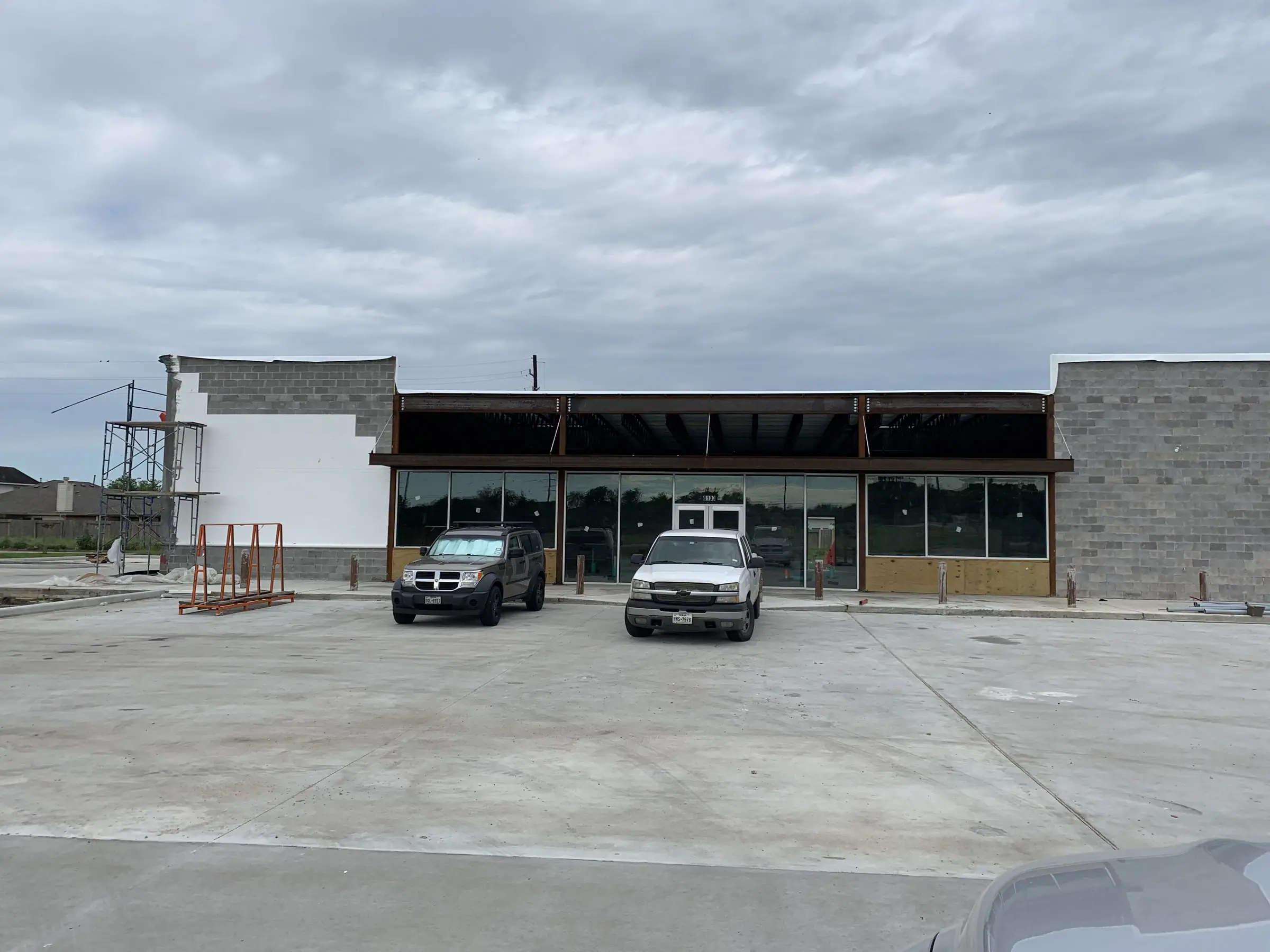
It depends on whether the space was ever finished. The Comptroller treats initial finish-out work as new construction, so finishing out a brand-new shell space for its first tenant is new construction and the labor is not taxed.
A second-generation space is different. If a space was already finished for a previous tenant and is being torn out and rebuilt for a new one, the work is rebuilding and replacing parts of an existing structure, which is remodeling of nonresidential property and taxable on the full charge.
This catches a lot of owners off guard when they compare bids for a tenant finish-out. Two spaces of the same size, one a new shell and one a former restaurant, can carry very different tax on the same scope of work.
The answer is to know which one you have before pricing. Ask the landlord whether the space has ever been finished out, and make sure your contractor prices the tax on the right basis. If a project includes both kinds of work, the contract should say so, as explained next.
Jobs that mix new construction and remodeling
Plenty of commercial projects do both: an addition on an existing building, a new canopy with a remodel of the store, or a finish-out that also replaces the existing roof. The Comptroller has a specific rule for these.
Publication 94-116 says that in a single-charge contract that adds square footage, if the remodeling is more than five percent of the total charge, the total is presumed taxable unless the taxable portion is separately stated. Put plainly: if the contract lumps a meaningful amount of remodeling in with new construction, the whole price can end up taxed.
The fix is in the paperwork. Have the contract and the invoices state the new construction and the remodeling as separate amounts, so tax is charged only on the remodeling portion. The Comptroller's rule on contracts, 34 TAC §3.291, also matters here: separated invoices do not turn a lump-sum contract into a separated one unless the contract itself requires them.
This is the kind of detail to settle before the contract is signed, not after the first invoice. Your accountant can tell you how it affects your own books; your contractor should be able to show you how each part of the job is being taxed.
Subcontractors, resale certificates and permits
On a remodel, the tax is collected once, from the owner, by the contractor who has the contract with the owner. Publication 94-116 says a remodeler who hires a subcontractor may give that subcontractor a resale certificate, and the remodeler then collects the tax from its own customer. That keeps the same work from being taxed twice down the chain.
On a separated new construction contract, the same publication allows resale certificates for materials incorporated into the property and for some services that are essential to completing the contract, such as job-site waste removal, janitorial, landscaping, surveying and security systems.
A contractor that collects sales tax has to hold a Texas sales and use tax permit. The Comptroller explains who needs one on its tax permits page. It is fair to ask a contractor for their permit number on a taxable remodel.
There is also a disaster exception. For nonresidential property damaged in a declared natural disaster, the repair labor is not taxable if it is separately stated, though the materials are still taxed.
How to budget for sales tax on a commercial project
The simplest way to avoid a surprise is to sort the work before anyone prices it:
- New building or addition: labor is not taxed, and how materials are taxed depends on whether the contract is lump-sum or separated.
- First finish-out of a new shell: treated as new construction.
- Remodel, repair or restoration of an existing commercial space, including a second-generation finish-out, a reroof or a storefront update: taxable on the total charge, at up to 8.25%.
- A mix of both: state the parts separately in the contract and on the invoices.
On a remodel, add the tax to your budget from the first number you look at. On a $200,000 remodel in an 8.25% city, that is $16,500 that has to come from somewhere.
Then compare bids on the same basis. One bid that includes tax and one that does not can look very different when they are really the same price. Ask each contractor to show the tax as its own line, and ask your accountant how the tax affects your depreciation and deductions. Texas PC Builders builds new buildings and does remodels and finish-outs across Dallas-Fort Worth.
Questions people ask
Is reroofing a commercial building taxable in Texas?
Yes. Publication 94-116 lists reroofing as an example of taxable remodeling of nonresidential property, so the total charge for a new roof on an existing commercial building is subject to sales tax.
Is apartment remodeling taxed the same way?
No. Apartment complexes count as residential property in Texas, and building, repairing or remodeling them is treated as nontaxable contractor labor.
Are building permit fees taxed on a remodel?
Not when they are separately stated. Building permit fees the contractor pays on the customer's behalf are left out of the taxable total if they are listed on their own.