Commercial concrete foundations, slabs and paving.
The concrete under a commercial building and around it: piers, foundations, slabs, parking lots, drives, sidewalks and curbs.
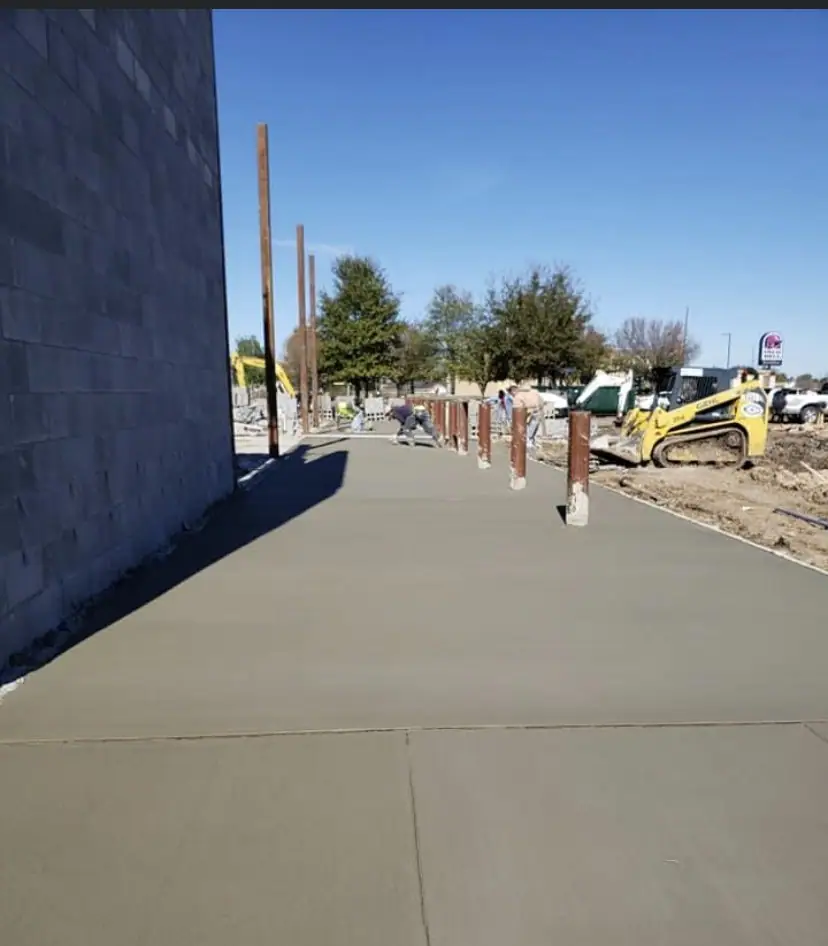
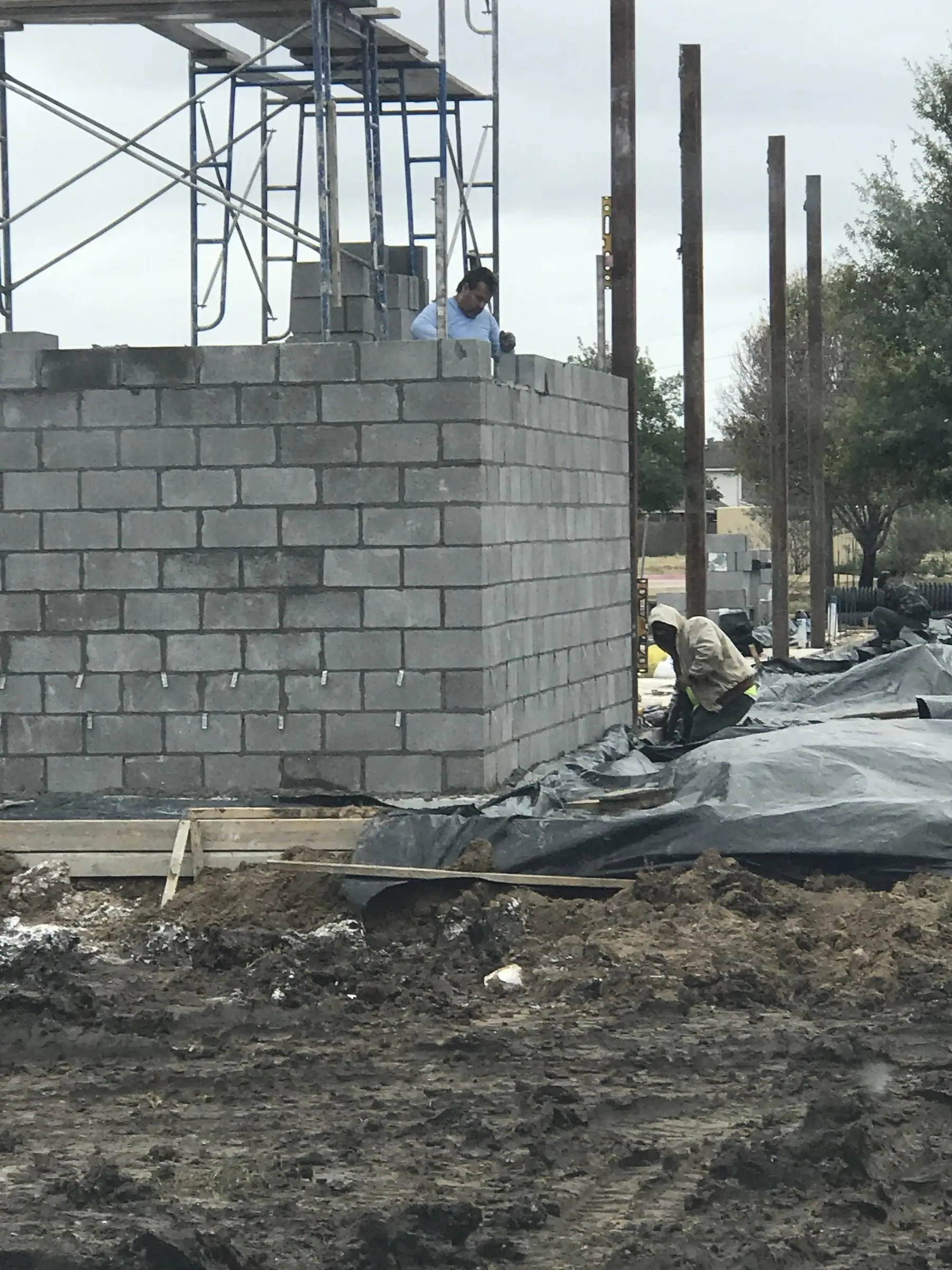
Foundations and slabs
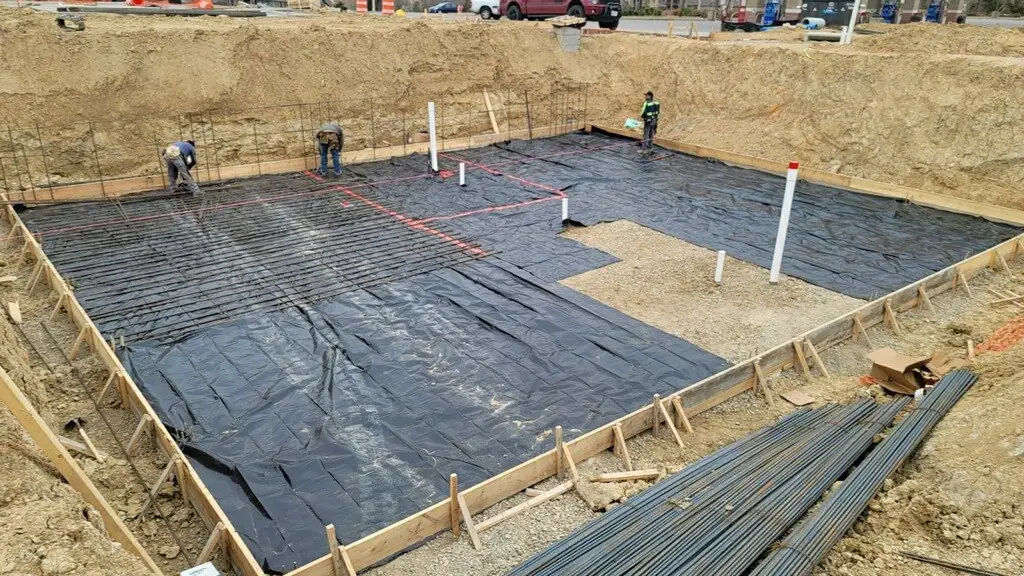
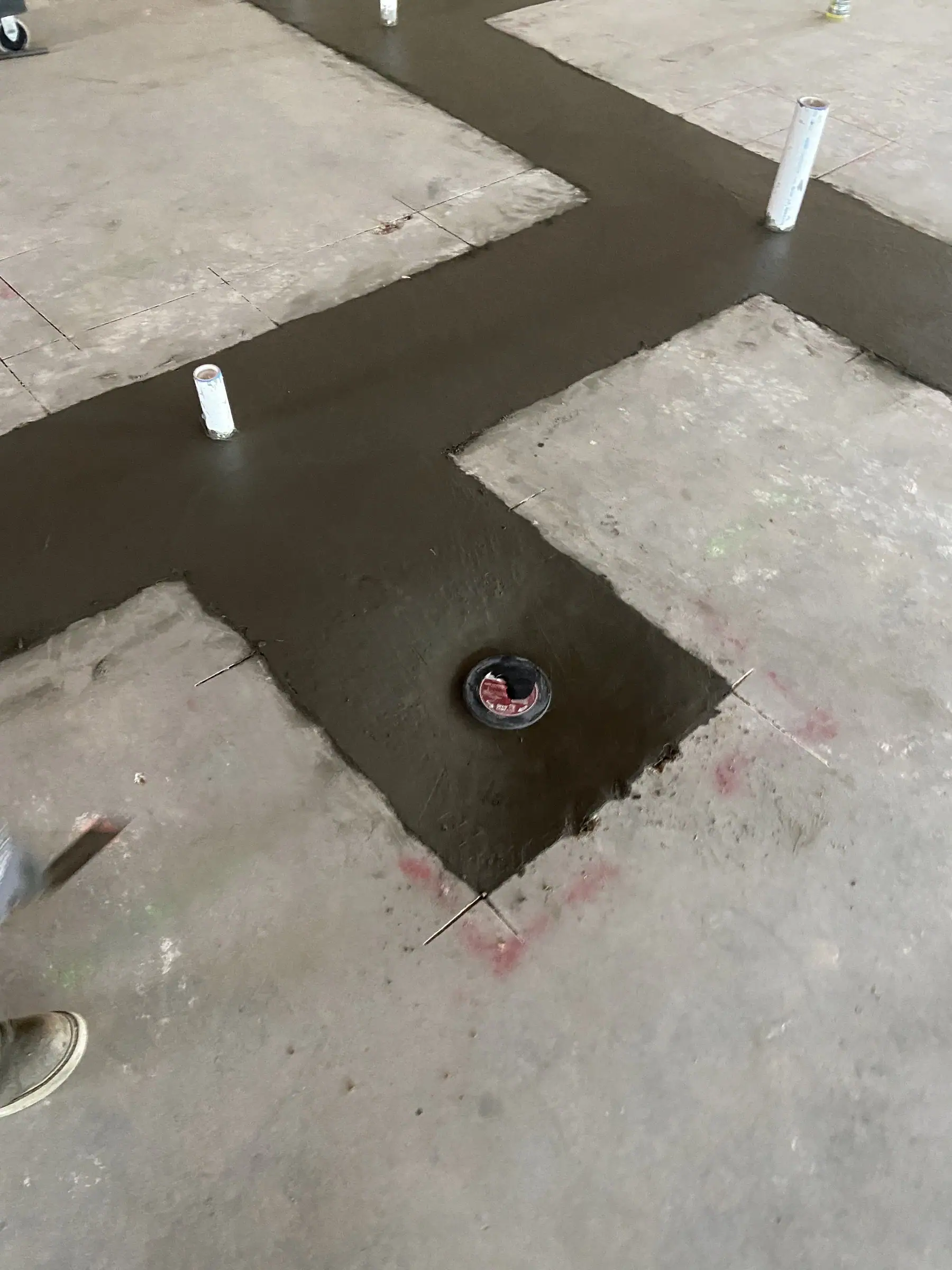
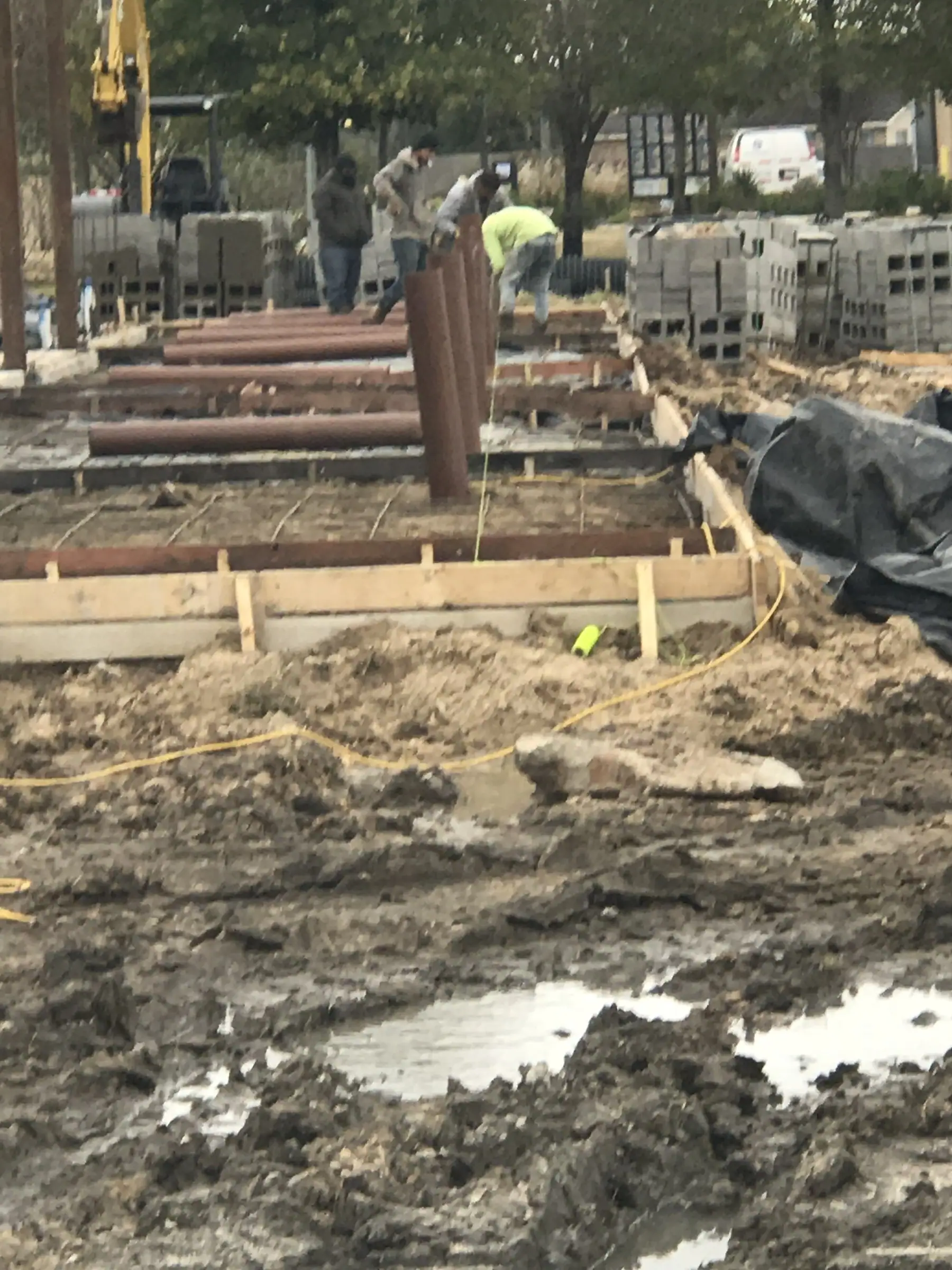
A commercial foundation is designed by the structural engineer from the soil report: drilled piers where the clay is deep, grade beams that tie them together, and a slab with the reinforcing, thickness and vapor barrier the drawings call for. Plumbing and electrical stubs are set in the forms before the pour, because moving one afterward means cutting the slab.
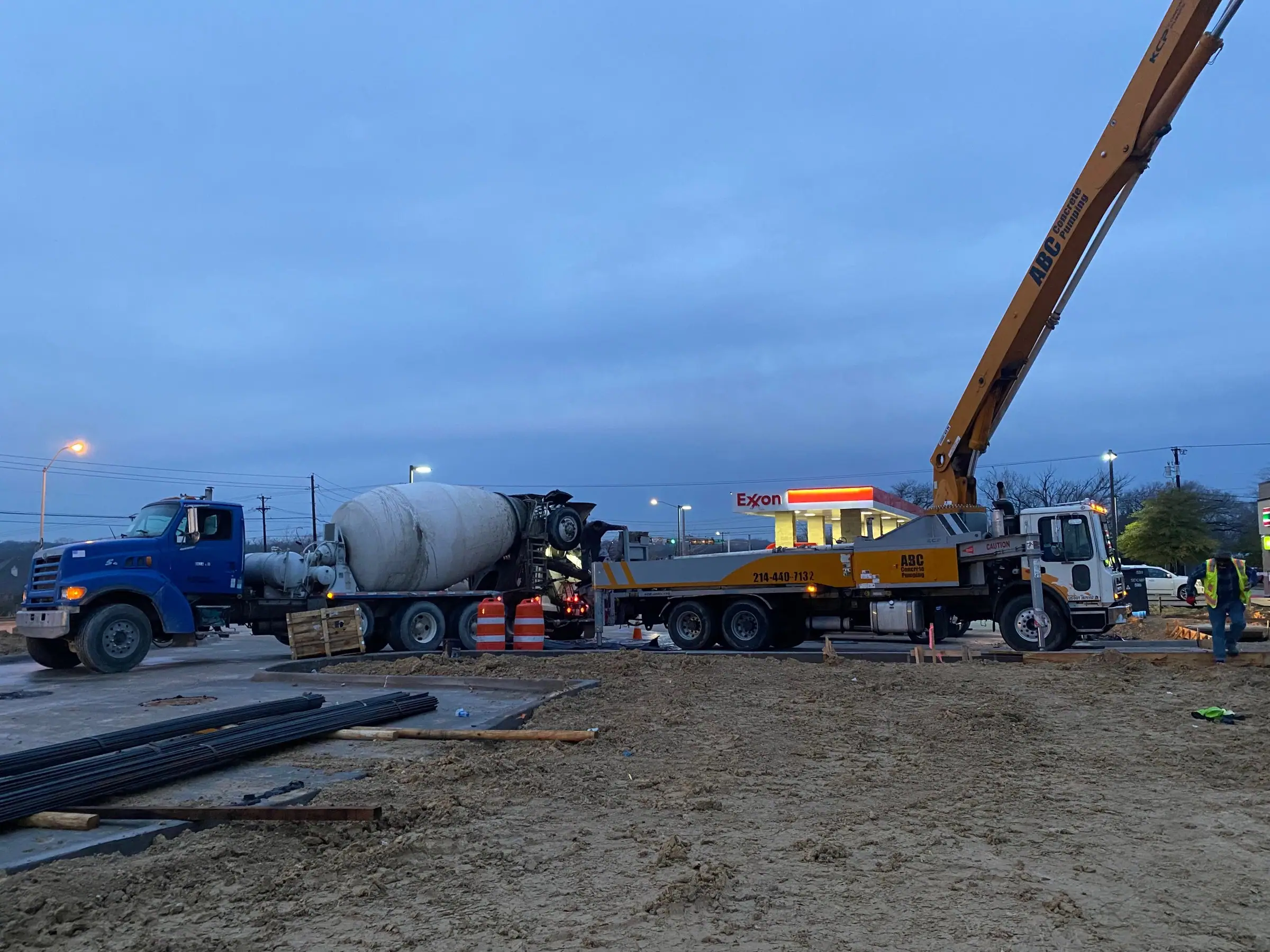
Our photos show the steps: forms set, poly vapor barrier down, rebar tied on chairs, plumbing stubbed up, and a pump truck placing the concrete.
Inspections and testing
Cities inspect the piers and the slab steel before the concrete is placed. On larger commercial jobs the building code also calls for special inspections and testing by an independent lab, who take concrete samples at the pour and break them later to prove the strength. McKinney, for one, asks for the special inspection paperwork at final inspection, so the reports are kept with the job from the first pour.
Parking lots, drives and sidewalks
Paving is the first thing customers drive on and the last thing poured. A commercial lot is laid out to the site plan for parking, fire lanes and accessible spaces, built thicker where trucks turn, jointed so it cracks where it is supposed to, and sloped so water reaches the inlets.
Sidewalks, curbs, wheelchair ramps, dumpster pads and drive approaches into the street are part of the same work, and the approach into a city street usually needs the city’s own inspection.
Concrete for canopies and equipment
Gas station canopies, sign poles, transformer pads and rooftop equipment supports each sit on their own concrete. Those foundations are small but carry a lot, and they are poured to the engineer’s details along with the rest of the site.
Questions about commercial concrete
Do you pour parking lots?
Yes. Parking lots, drive approaches, sidewalks, curbs and dumpster pads for commercial sites.
Why does a commercial slab need a soil report?
North Texas clay swells and shrinks with moisture. The soil report tells the engineer how deep the piers go and how the slab is built.
Do you pour foundations for gas station canopies?
Yes, along with the rest of the station’s concrete.
Where we offer commercial concrete
- Allen, TX
- Arlington, TX
- Aubrey, TX
- Carrollton, TX
- Celina, TX
- Dallas, TX
- Denton, TX
- Duncanville, TX
- Fort Worth, TX
- Frisco, TX
- Garland, TX
- Irving, TX
- Lewisville, TX
- Little Elm, TX
- Mansfield, TX
- McKinney, TX
- Mesquite, TX
- Plano, TX
- Richardson, TX
- Rockwall, TX
- Rowlett, TX
- Royse City, TX
- Terrell, TX
Related services
- Commercial constructionNew commercial buildings from site work and utilities to the slab, the shell and the final inspection.
- Gas station construction and remodelsNew gas stations and convenience stores, fuel canopies, and remodels of stations already open.
- PlumbingUnder-slab and site plumbing, sewer and water lines, restrooms, grease interceptors and gas lines.
- Retail constructionRetail strip centers, single-tenant stores and shell buildings, with the storefront, parking and utilities.
Tell us about your concrete project.
Send the address, the plans or just the idea. Greg will get back to you to set up a time to look at it.
- Freeestimates on every project
- 7 daysopen 9 AM to 6 PM
- 24/7for emergency calls
- Since 2010building across Dallas-Fort Worth
Tell us about the project
We’ll reach out to set up a time to look at your project.
Request sent
We’ll get back to you with a time to come out.
Need us sooner? Call or text (214) 842-0293.