Plumbing under the slab and above it.
Sewer and water service, under-slab drains, restrooms, floor sinks, grease interceptors and gas lines for commercial buildings.
Underground plumbing comes first
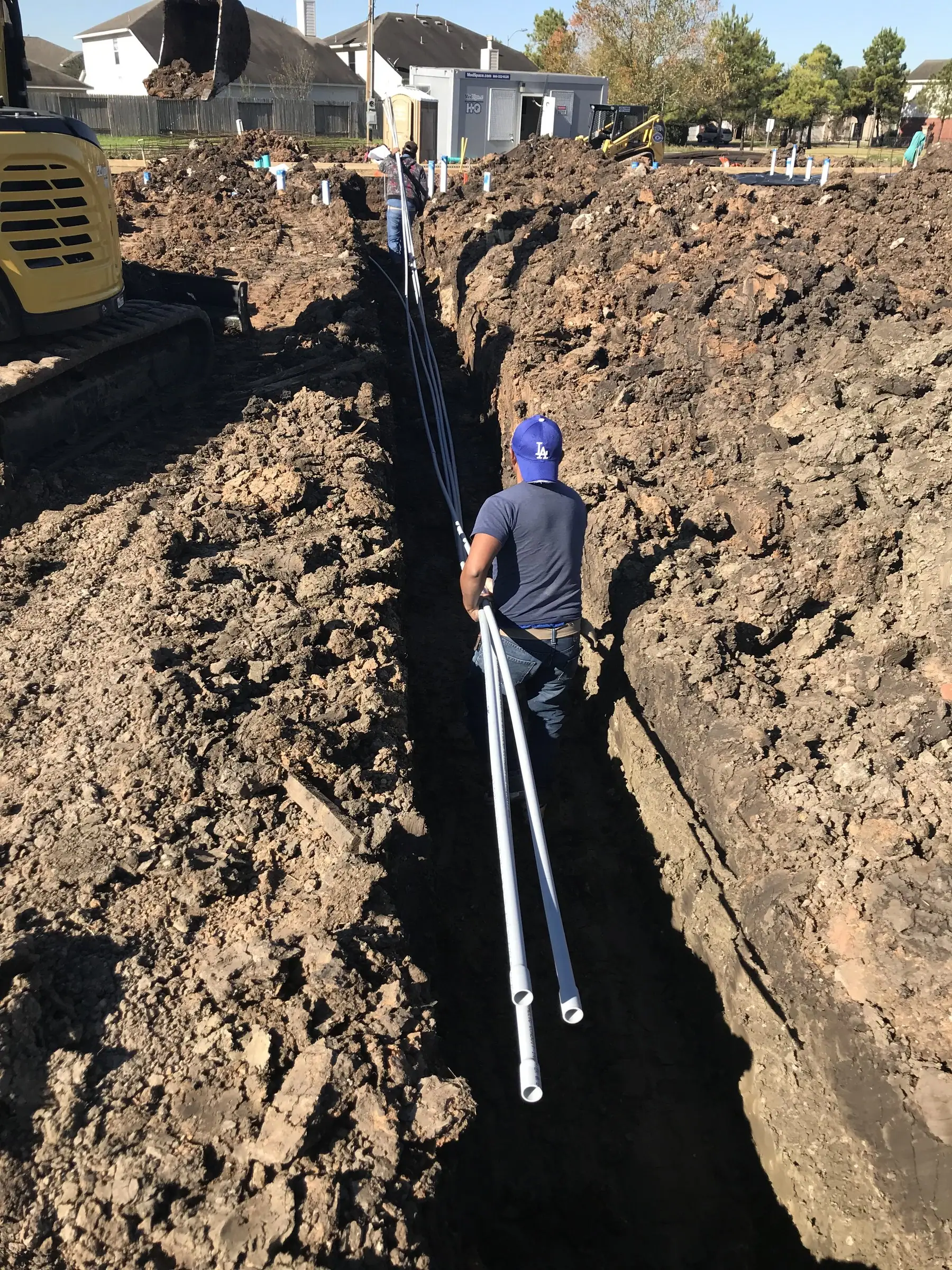
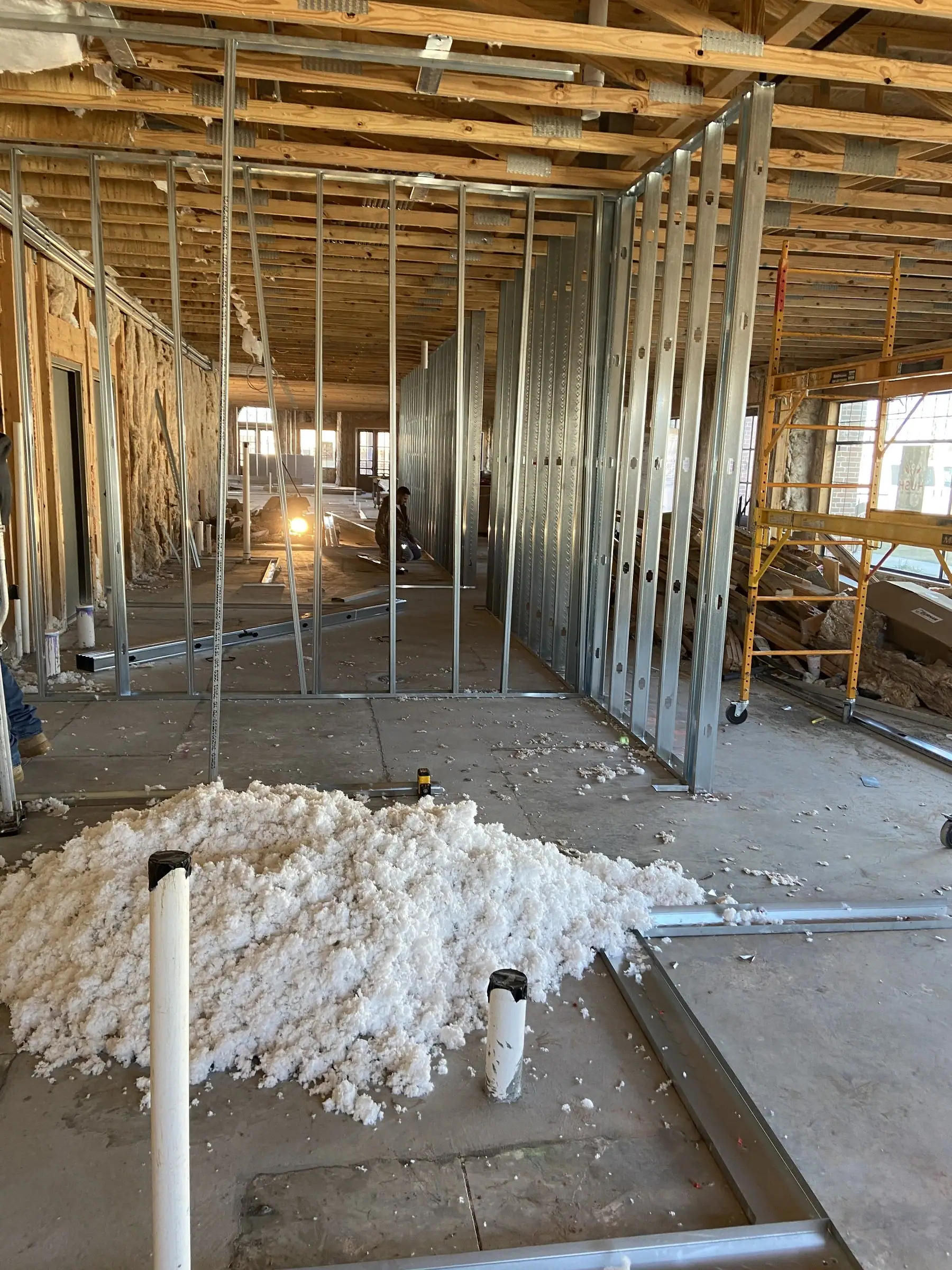
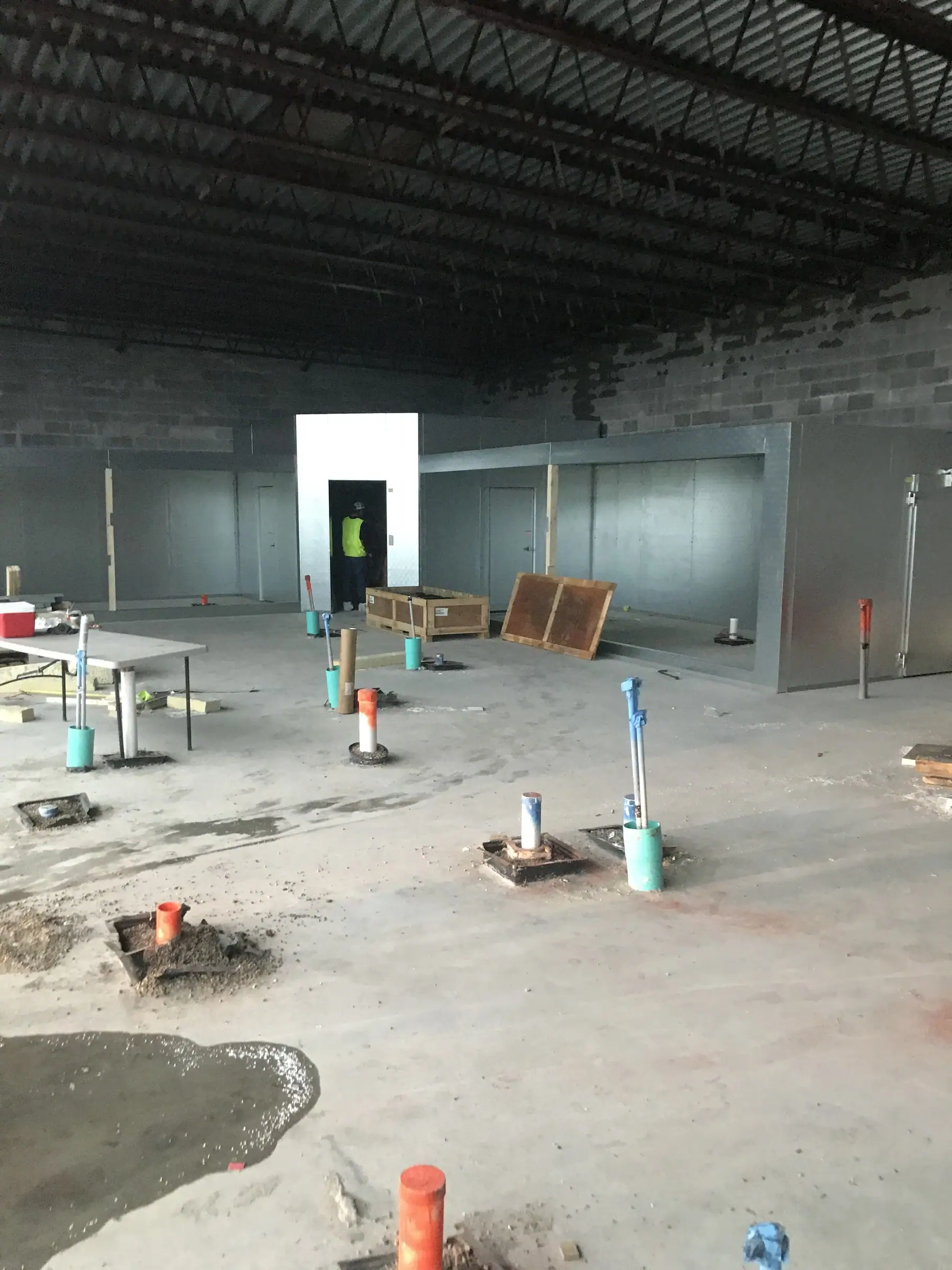
In a slab building, every drain is set before the concrete: restroom lines, floor drains, floor sinks in a kitchen, the line to the grease interceptor and the sewer service out to the street. The lines are tested and inspected before they are buried, because the next time anyone sees them is when the slab is cut.
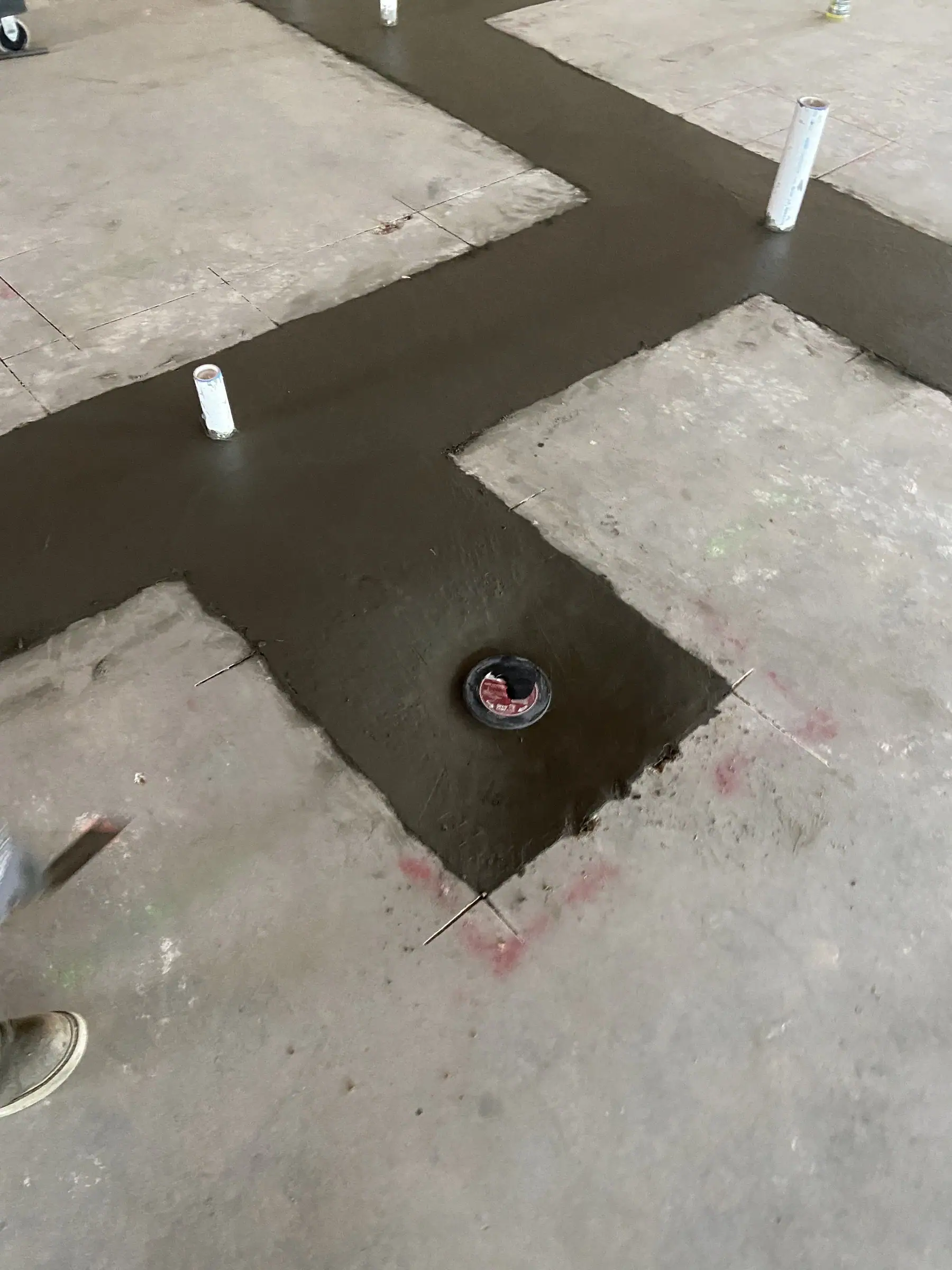
In a finish-out, that means saw-cutting a trench in the existing slab, laying the new lines and patching the concrete back, like the patched trenches in our photos.
Licensed plumbers and the city
Plumbing in Texas is licensed by the Texas State Board of Plumbing Examiners, and the plumbing permit is pulled under a licensed plumber. Cities inspect the underground, the rough-in in the walls and the final, and many require the backflow devices on a commercial water service to be tested by a registered tester.
Water service and sewer taps
A new building needs a water meter, a tap on the city main and a sewer connection, and in most cities those are their own fees and inspections apart from the building permit. Sizing the meter for the fixture count, and for a kitchen or irrigation if there is one, keeps the water bill and the pressure where they should be.
On a remodel, the question is usually the opposite: whether the existing meter and line are big enough for a new restaurant or extra restrooms. We check before the layout is final, because a bigger meter or a new tap can change the budget.
Restrooms, grease and gas
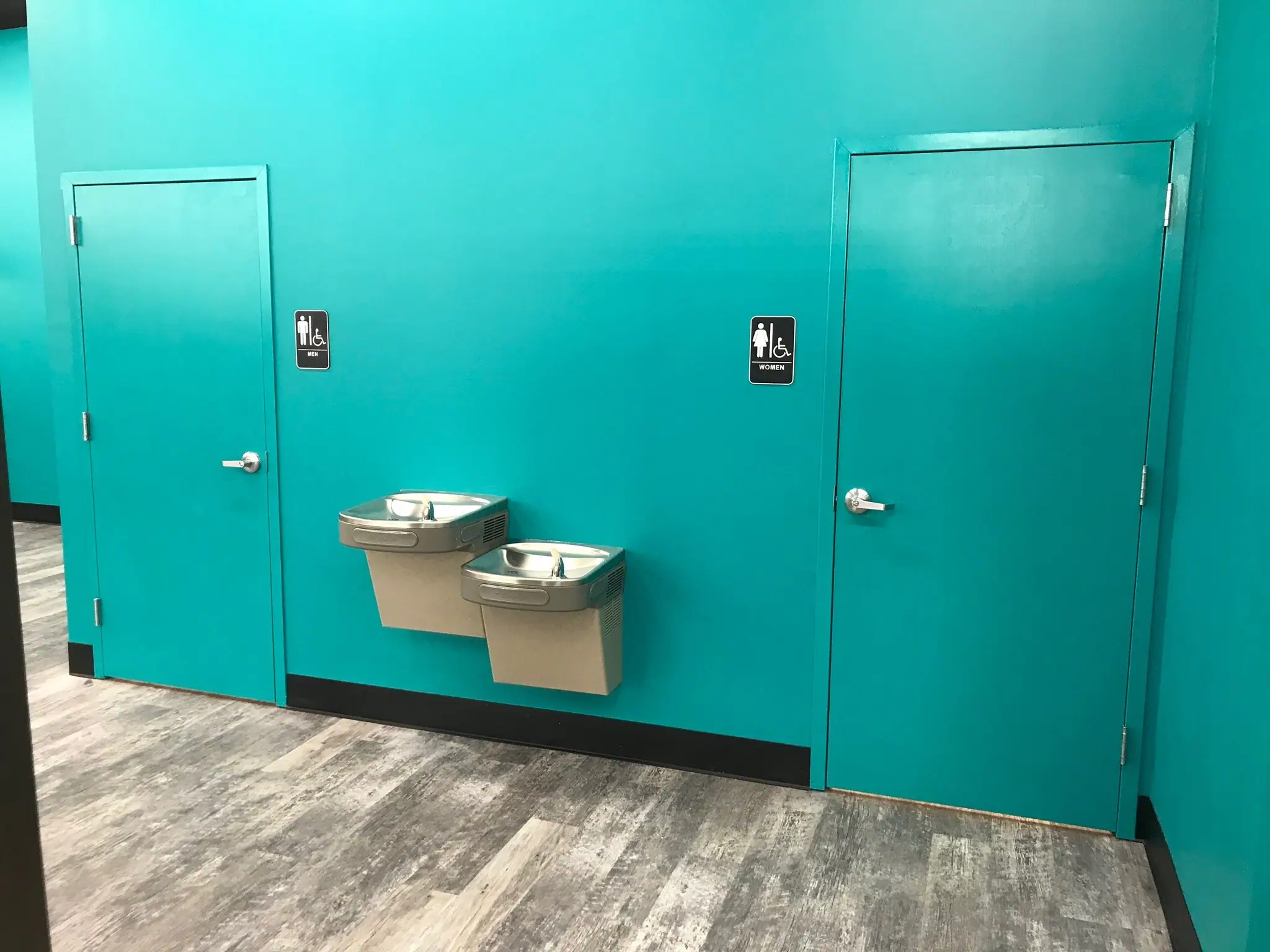
Restrooms are where plumbing and accessibility meet: clearances, grab bars, sink heights and drinking fountains are set by the accessibility standards as much as by the plumbing code.
Restaurants add grease interceptors and floor sinks, and kitchens, water heaters and rooftop units often need gas lines, which are pressure tested before the gas company sets the meter.
Questions about plumbing
Can you add a restroom to my space?
Usually, yes. In a slab building it means cutting a trench to reach the sewer line. We check where the line runs first.
Do you install grease interceptors?
Yes, sized and placed to the approved plumbing plans.
Is the plumbing licensed and inspected?
Yes. Texas requires a licensed plumber for the permit and the work, and the city inspects it at each stage.
Where we offer plumbing
- Allen, TX
- Arlington, TX
- Aubrey, TX
- Carrollton, TX
- Celina, TX
- Dallas, TX
- Denton, TX
- Duncanville, TX
- Fort Worth, TX
- Frisco, TX
- Garland, TX
- Irving, TX
- Lewisville, TX
- Little Elm, TX
- Mansfield, TX
- McKinney, TX
- Mesquite, TX
- Plano, TX
- Richardson, TX
- Rockwall, TX
- Rowlett, TX
- Royse City, TX
- Terrell, TX
Related services
- Restaurant constructionNew restaurant buildings and restaurant finish-outs, from the hood and grease interceptor to the host stand.
- Commercial concreteFoundations, slabs, parking lots, drives, sidewalks and curbs for commercial sites.
- Tenant finish-outTurn an empty shell or second-generation space into a finished store, office or restaurant ready to open.
- ElectricalNew electrical service, panels, underground conduit, lighting and equipment circuits for commercial buildings.
Tell us about your plumbing project.
Send the address, the plans or just the idea. Greg will get back to you to set up a time to look at it.
- Freeestimates on every project
- 7 daysopen 9 AM to 6 PM
- 24/7for emergency calls
- Since 2010building across Dallas-Fort Worth
Tell us about the project
We’ll reach out to set up a time to look at your project.
Request sent
We’ll get back to you with a time to come out.
Need us sooner? Call or text (214) 842-0293.