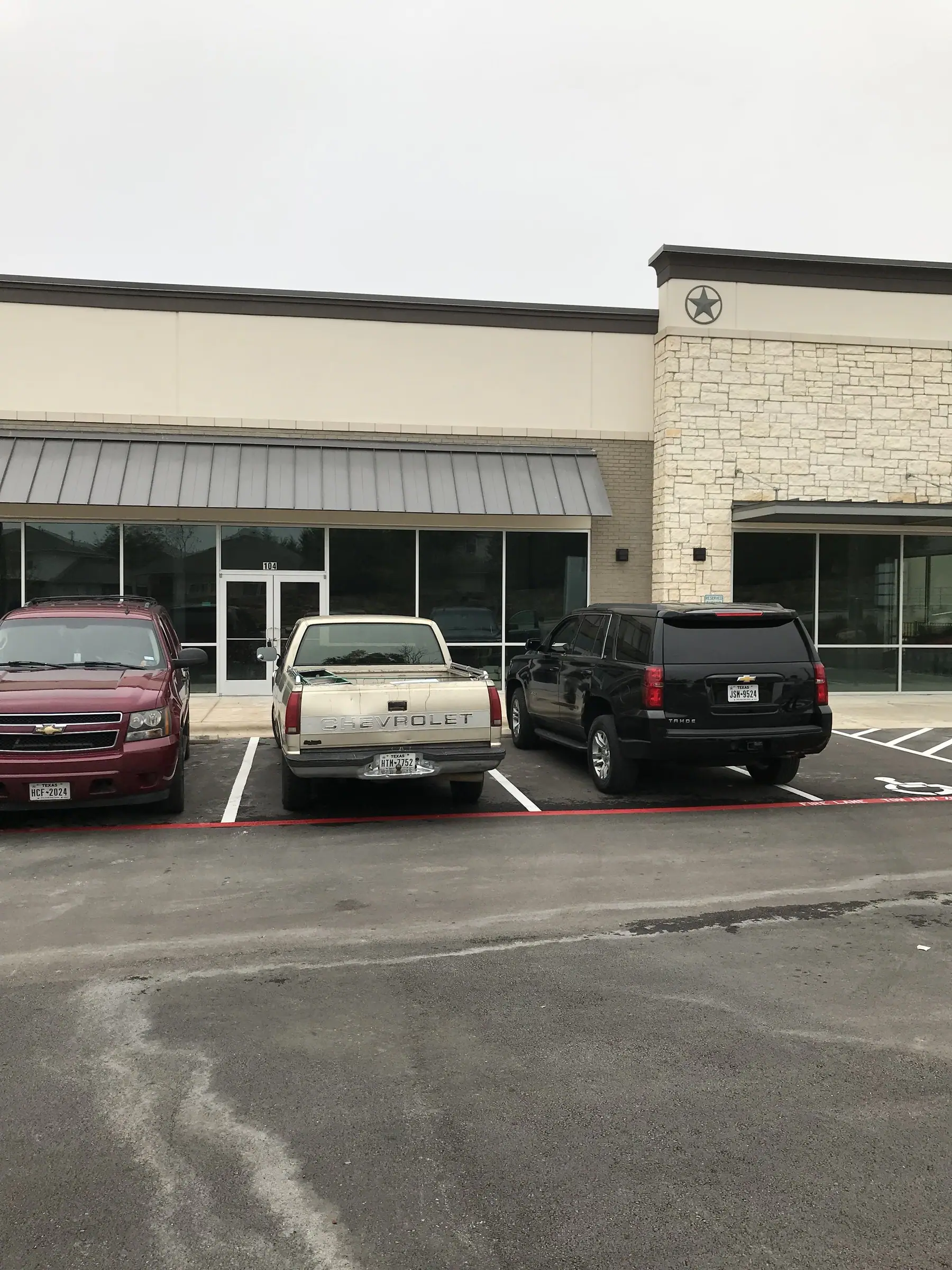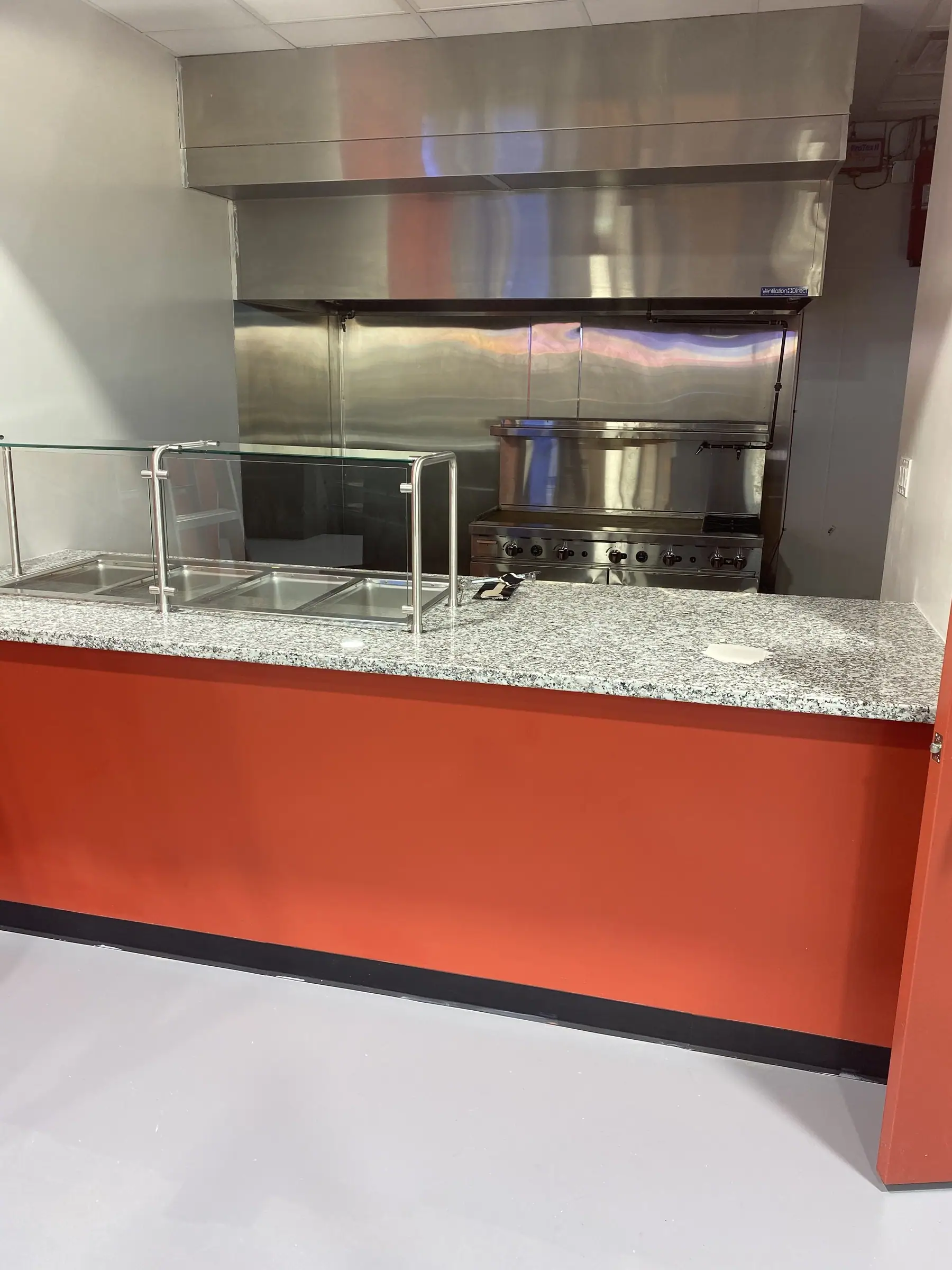
The short answer
In Dallas, any commercial or institutional food service operation must have a grease trap. It is sized under Chapter 10 of the Dallas Plumbing Code and submitted with the construction plans, and it must be 100% pumped at least every 90 days, or sooner once 25% of it holds grease or solids, by a city-permitted hauler.
Who needs a grease trap in Dallas
Every food business that cooks or washes dishes on site. The Dallas Water Utilities Pretreatment Program FAQ says that "in Dallas, a grease trap is required for any commercial or institutional food service operation." That covers restaurants, cafeterias, bakeries, coffee shops with kitchens, and convenience stores with food prep.
The building side says the same thing in its own words. The city's Grease Interceptor Submittal Guidelines require a grease interceptor submittal for every food service establishment location where a health permit is required.
The reason is the sewer. Fats, oils and grease poured down a sink cool and harden in the pipes, and the city's pretreatment program exists to keep them out of the public sewer system. A grease trap, also called a grease interceptor, is a tank that catches the grease before the wastewater leaves the building.
If you are opening a restaurant in an existing space, do not assume the trap that is there is the right size or in good shape. A space that was a retail store will not have one at all, and a former restaurant may have one sized for a much smaller kitchen.
How a grease interceptor is sized and submitted
The size is not a guess and not the installer's choice. The Water Utilities FAQ says the size is determined by the Dallas Plumbing Code sizing criteria for grease traps, and it sends questions to the Plumbing and Mechanical Section.
The Grease Interceptor Submittal Guidelines spell out what the city wants to see. The submittal goes in with the construction documents for plan review, and the field plumbing inspector asks for it again during construction. It has to include:
- Documents based on the expected conditions of use for the project, with the project address and the permit number or project name on every page.
- Sizing calculations under Chapter 10 of the Dallas Plumbing Code, Traps, Interceptors and Separators.
- The manufacturer's cut sheet for the chosen interceptor, showing that it meets at least one of the three approved listings in Chapter 10, with the model identified.
- An interceptor sized according to the manufacturer's installation instructions.
The guidelines on the city's site cite the 2015 edition of the Dallas Plumbing Code. Codes are updated over time, so the designer should confirm which edition the city is enforcing when the plans are submitted. Sizing depends on the kitchen: the fixtures and equipment that drain to it, the flow and the expected use, which is why the submittal is tied to the actual layout.
Dallas requires a grease trap to be pumped completely at least every 90 days, and sooner if a quarter of it fills with grease or solids.The Texas PC Builders crew
Where the grease trap goes
Outside if you can. The Dallas Consumer Health Guidelines for Fixed Food Establishments recommend that the grease trap be located outside the building, if possible, serving all sinks, dishwashers and floor drains in the food preparation areas.
If it has to be inside, the same guidelines say the grease trap must be flush-floor mounted with a sealed lid and outside the food preparation area. That keeps the pumping, and the smell that comes with it, away from where food is handled.
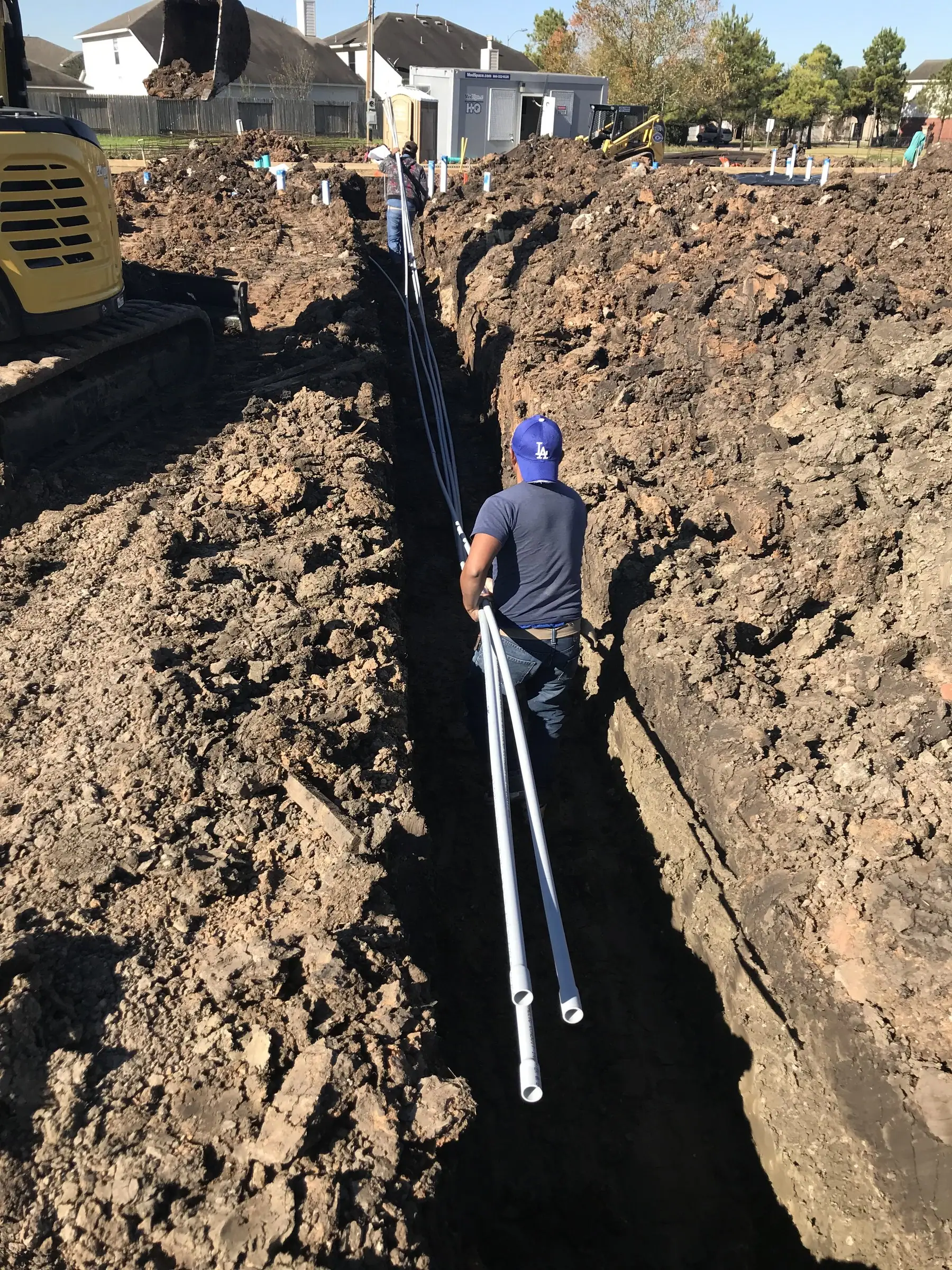
Location drives cost. An outdoor interceptor means excavation, a concrete pad or traffic-rated lid if it sits in a drive, and underground lines from the kitchen to the tank. An indoor trap means saw-cutting the slab, trenching the lines and patching the floor, which is common in a finish-out of an existing building. Both are commercial plumbing jobs.
Access matters for the life of the restaurant, not just the install. The trap will be pumped at least four times a year, so the truck and the hose need a clear path to it.
How the grease trap fits into restaurant plan review
The grease trap is one part of a bigger review. According to the Guidelines for Fixed Food Establishments, a new food business applies for a Food Establishment Permit first, and that application has to be in hand to submit plans. The plans show the floor, fixture and equipment layout, the room finish schedule and the location of floor and hub drains.
The city's Plans and Permitting Site Evaluation and Contact Form says that for a new or remodeled food establishment, two copies of the blueprints go to the Building Permit Center, where they are reviewed, stamped and corrected, with cut sheets for the equipment. More corrections may follow an onsite inspection.
Other kitchen details in the same guidelines connect to the drains: food contact equipment such as prep sinks, ice bins and ice machines must drain indirectly through an air gap, drains go next to the equipment that discharges waste, and floors must slope to a floor drain so water does not stand.
Getting all of this on one coordinated set of drawings is what keeps a restaurant build from stalling at plan review. The grease interceptor calculation, the plumbing plan and the equipment layout should all agree before the plans go in.
How often a grease trap must be pumped in Dallas
At least every 90 days, and sooner when it fills. The city's grease trap notice for food service establishments says traps must be 100% pumped out the earlier of every ninety days, or when 25% or more of the wetted height of the trap, measured from the bottom to the outlet pipe, contains floating materials, sediment, oils or greases.
The Water Utilities FAQ cites Dallas City Code Chapter 19, Section 19-126.2(c), and says traps must be completely emptied and cleaned by a licensed hauler, as often as necessary but not less than every 90 days.
The same notice says the business, as the generator, must supervise the cleaning and make sure 100% of the contents are removed. A partial pump, or a skim off the top, does not count.
Grit traps have their own schedule: the notice requires grit trap cleaning annually, or more often if needed. And it reminds generators that hazardous waste, such as acids, strong cleaners, pesticides, paint, solvents or gasoline, should not go into the sanitary sewer.
Haulers, manifests and records
Only a permitted hauler can pump a Dallas grease trap. The city's notice says you must use a liquid waste transporter that is permitted by the City of Dallas, and that a list of permitted transporters is available on request. The Water Utilities FAQ adds that the hauler must be licensed by the Texas Commission on Environmental Quality, approved by Dallas Water Utilities, and deliver the waste to a properly permitted disposal site.
Every pump-out has paperwork. The transporter must present a City of Dallas Liquid Waste Transportation Manifest, called a trip ticket, for the business to complete before any waste is removed. The business has to make sure the transporter writes down the number of gallons removed, and both the business and the transporter sign the manifest at the time of removal.
Keep those manifests. They are the business's proof that the trap is being pumped on schedule, and the city's pretreatment program is the one that checks. The Pretreatment Program page is where Dallas Water Utilities keeps its rules and forms for liquid waste.
A trap that is the right size, in the right place, with a clear path for the truck makes all of this routine. A trap that is undersized fills faster, which means more pump-outs and more cost every year the restaurant is open.
Buying or remodeling an existing restaurant in Dallas
A restaurant that changes hands or gets renovated goes back through the health side. The Guidelines for Fixed Food Establishments say a new application must be made with the Department of Code Compliance for an existing permitted facility if there is a change of ownership or any renovation of an existing food establishment, and that all equipment and facilities must meet Chapter 17 of the Dallas City Code.
That makes the grease trap one of the first things to check before buying or leasing a former restaurant. Find out where it is, how big it is, when it was last pumped and whether it matches the kitchen you plan to run. A bigger menu, more fryers or a dishwasher that the last tenant did not have can mean the existing trap is too small.
A change of use or a new tenant also needs a new certificate of occupancy, which we cover in our post on certificates of occupancy in Dallas.
For restaurants across Dallas, the grease trap is a small part of the budget compared with the hood, the kitchen and the dining room, but it is one of the parts that can hold up a permit or an opening if it is missed. Pricing it at the start, with the rest of the plumbing, is the way to keep it from becoming a surprise.
Questions people ask
Can I pump my own grease trap in Dallas?
No. The city requires a liquid waste transporter permitted by the City of Dallas, and the Water Utilities FAQ says the hauler must also be licensed by the Texas Commission on Environmental Quality.
Does a coffee shop need a grease trap in Dallas?
If it is a commercial food service operation with a health permit, the city's rules require one. The size depends on the fixtures and equipment draining to it under the Dallas Plumbing Code.
Who do I ask about grease trap sizing in Dallas?
Dallas Water Utilities sends sizing questions to the city's Plumbing and Mechanical Section, and the sizing calculation is part of the plans your designer submits.